News
Back to news
Apokoronas pushes for joint planning of north Crete highway and high-voltage power line
Press release · Municipality of Apokoronas

Apokoronas pushes for joint planning of north Crete highway and high-voltage power line

Summary

The municipality of Apokoronas has asked the ministries of Infrastructure and of Environment to release the full construction contract for the new North Crete Highway (BOAK), so that both projects — the highway and the planned Chania–Damasta high-voltage power line — can be assessed and built together along the same route. The municipality argues that coordinated implementation, with the power line laid underground, would cut costs, reduce environmental damage and lower wildfire risk. A separate legal challenge by the municipality against the power line's environmental permits is already before the Council of State.

Apokoronas calls for joint corridor planning for highway and power line

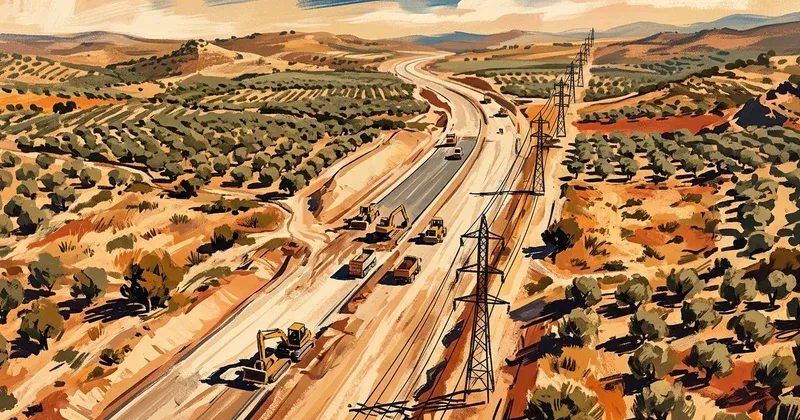
The municipality of Apokoronas is pressing for two of Crete's largest infrastructure projects to be built simultaneously and along the same route: the new North Crete Highway (BOAK) and the high-voltage power line connecting Chania to Damasta. To make this possible, the municipality has formally requested that the ministries of Infrastructure and Transport, and of Environment and Energy, hand over the full construction contract for the BOAK, including all annexes, technical studies, maps and environmental conditions.

Why the contract documents matter

According to the municipality, access to the contract documents is needed for two reasons. First, it is required to support the municipality's existing application to the Council of State — Greece's supreme administrative court — seeking the annulment of the environmental permits issued for the high-voltage power line. Second, it would allow a unified technical, environmental and social assessment of both projects to be carried out before construction begins.

The case for a shared corridor

The municipality argues that building both projects along the same axis — with the power line routed underground — would deliver a range of benefits compared to separate, uncoordinated construction:

  • Natural environment: Reduced loss of ecosystems and better protection of biodiversity
  • Fire risk: Lower danger of wildfires along the route
  • Public health: Reduced exposure to electromagnetic fields for nearby residents
  • Property: Less land taken out of use and less loss of property value for landowners
  • Cost: Lower construction, operating and maintenance costs through shared infrastructure
  • Planning: A single unified approval process rather than multiple separate ones

Legal challenge already filed

The municipality of Apokoronas has already filed an application with the Council of State challenging the environmental permits for the Chania–Damasta high-voltage line. The municipality states this was done on grounds of environmental and public health protection, which it describes as non-negotiable.

What is the BOAK?

The BOAK (Boreios Odos Kritis — North Cretan Road) is a major highway project intended to link Crete's north coast from east to west. The municipality describes it as a project of vital importance for the island, supporting road safety, regional connectivity, tourism and the local economy.

The municipality says it does not oppose development, but insists on responsible and sustainable implementation, full transparency, and cooperation between the two ministries involved.

Note: This article is based on a press release issued by the municipality of Apokoronas. No response from the ministries or the grid operator is included in the source.

Official source

Source translation

Machine-translated from the official source document.

PRESS RELEASE – BOAK and the Chania–Damasta High-Voltage Line: The full construction contract for the new BOAK is requested for submission to the Council of State, and for unified, simultaneous implementation of the projects along the same axis

February 9, 2026, 2:21 PM

The Mayor of Apokoronas, Charalampos Koukianakis, has requested from the Ministry of Infrastructure and Transport and the Ministry of Environment and Energy the provision of the full construction contract for the new BOAK, with all annexes, technical studies, maps and environmental conditions, so that the two Ministries may cooperate with each other and a unified assessment can be made of the simultaneous implementation of the BOAK and the Chania–Damasta High-Voltage Line along the same axis.

Access to the contract is necessary for submission to the Council of State, in the context of the application for annulment of the environmental conditions of the High-Voltage Line, which the Municipality of Apokoronas has already filed.

As the Mayor of Apokoronas, Charalampos Koukianakis, states, the simultaneous implementation of the two projects along the same axis, with proper combined planning and undergrounding of the line, is not a problem – on the contrary, it creates multiple benefits:

It limits the loss of natural ecosystems, reduces disturbance and safeguards biodiversity, reduces the risk of fires, limits exposure to electromagnetic fields, protects residents, limits land seizure and the devaluation of properties, while consolidating infrastructure in the same corridor.

The simultaneous construction of the two projects significantly reduces construction, operating and maintenance costs, saves public resources and allows for a unified technical, environmental and social evaluation, limits risks and serves the public interest.

The Municipality of Apokoronas has already appealed to the Council of State regarding the environmental conditions of the High-Voltage Line. We did not do so for reasons of impression, but because the protection of the environment and public health is non-negotiable.

In conclusion, the Mayor of Apokoronas, Charalampos Koukianakis, stated that the BOAK is a project of vital importance for Crete: it enhances safety, accelerates the interconnection of regions, supports tourism and production. The combined implementation with undergrounding simultaneously secures these benefits and the protection of the environment, society and public finances.

Crete, a unique place with natural wealth, cultural heritage and active people, demands the self-evident.

Apokoronas does not say "no" to development. It says "yes" to responsible, sustainable and safe development, with full transparency, ministerial cooperation and respect for citizens, the environment and the public interest.

We demand full transparency, access to contractual and technical data, and a unified assessment of the two projects in order to protect the health of residents, the environment and the economy of the region.