News
Back to news
Apokoronas council votes unanimously to route new highway and power line through shared corridor
Press release · Municipality of Apokoronas

Apokoronas council votes unanimously to route new highway and power line through shared corridor

Summary

The Apokoronas municipal council has voted unanimously to call for the new Northern Road Axis of Crete (VOAK) and the Chania–Damastas high-voltage power line to be routed through a single shared corridor, with the energy infrastructure integrated into the road alignment. The council argues that planning and permitting the two projects separately would lead to duplicate land expropriations, a larger environmental footprint, and wasted public funds. The resolution has been forwarded to the relevant ministries and to the Council of State as part of the municipality's ongoing legal proceedings.

Apokoronas council pushes for single corridor for road and power line

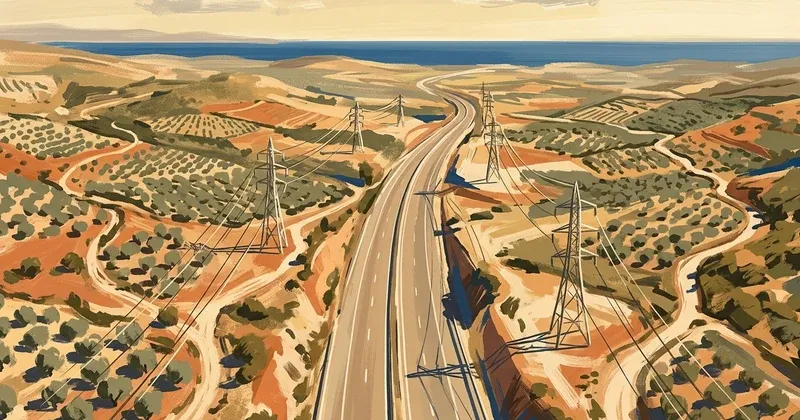
The Apokoronas municipal council has passed a unanimous resolution calling for two large national infrastructure projects to share the same land corridor: the new Northern Road Axis of Crete, known by its Greek acronym VOAK, and the high-voltage power line planned between Chania and Damastas. Under the proposal, the power line infrastructure would be technically integrated into the road alignment rather than routed on a separate path through the municipality.

The case for a joint corridor

The council argues that two infrastructure projects of national scale affecting the same geographic area cannot be planned in isolation from each other. According to the municipality, routing them separately would:

  • Significantly increase the environmental footprint and disruption to the landscape
  • Raise the risk of fires and technical failures
  • Double the number of land expropriations and property restrictions imposed on residents
  • Waste public money that could be saved through shared construction and planning
  • Prevent a complete assessment of the combined environmental impact of both projects

Apokoronas covers a wide area of villages, farmland, tourism businesses, cultural heritage sites, and natural habitats. The council's position is that layering multiple large infrastructure projects across this area without coordinated planning would cause lasting environmental and social harm.

What happens next

The municipality has already formally requested full technical documentation and a comprehensive impact assessment from the responsible authorities. The unanimous council resolution will now be sent to the relevant ministries and to the Council of State — Greece's highest administrative court — as supporting material in the municipality's ongoing institutional proceedings.

The council describes its position as consistent with European principles of integrated infrastructure planning and with constitutional protections for the environment.

Note: This report is based on the municipality of Apokoronas's own press release.

Official source

Source translation

Machine-translated from the official source document.

PRESS RELEASE – Unanimous decision of the Municipal Council of Apokoronas for the joint siting of the new Northern Road Axis of Crete (VOAK) and the Chania–Damastas High Voltage Line in the same corridor

February 27, 2026, 2:13 PM

With unanimity and a sense of historic responsibility, the Municipal Council of Apokoronas approved the proposal of the Mayor of Apokoronas, Charalampos Koukianakis, for the unified and combined siting of the new VOAK and the Chania–Damastas High Voltage Line in the same development corridor, with technically integrated passage of the energy infrastructure.

This decision constitutes a clear political position in favour of rational planning, institutional consistency, and sustainable development.

The simultaneous development of two projects of national scale on the same geographic axis cannot be treated in a fragmented manner. The joint siting:

  • drastically reduces the environmental footprint and landscape fragmentation
  • limits the risk of fires and technical failures
  • prevents the doubling of expropriations and property encumbrances
  • ensures economies of scale and savings of public resources
  • allows for an overall rather than fragmented environmental assessment of cumulative impacts

This practice is consistent with modern European principles of integrated infrastructure planning and with the constitutional requirements for the protection of the environment and quality of life. Apokoronas is a living place with settlements, agricultural production, tourist activity, cultural heritage, and natural ecosystems of high value. The uncontrolled, cumulative burdening of infrastructure without strategic coordination undermines the comparative advantage of the area and creates permanent environmental and social costs.

The health and safety of citizens, the protection of property, and the preservation of quality of life are not negotiable parameters of development.

The Municipality of Apokoronas has already taken institutional steps, requesting full transparency, technical data, and a comprehensive impact assessment. The unanimous decision of the Municipal Council explicitly supports the proposal for the joint siting of VOAK and the High Voltage Line and demonstrates that the fragmented development of the two projects is contrary to the principles of rational planning and sustainable development. The decision is being sent as a reinforcing element to the competent Ministries and to the Council of State, within the framework of the municipality's institutional actions.

The unanimity of the decision sends a clear message: "When it comes to our place, there are no factions. There is a common responsibility."