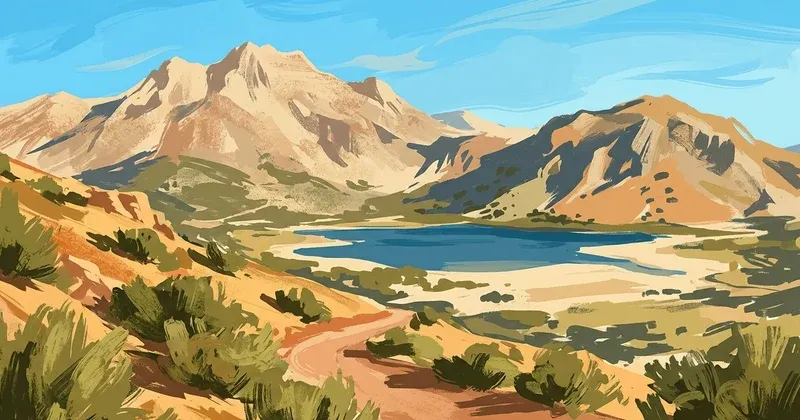
Wind farm proposed above Asi Gonia draws unanimous opposition from Apokoronas council
A plan to build eight wind turbines in the mountains above Asi Gonia, in the heart of the White Mountains of western Crete, has triggered a formal political response from the Apokoronas municipality. The proposed installation would have a total capacity of 52.8 MW, with each of the eight turbines rated at 6.6 MW and standing approximately 185 metres tall.
According to the planning documents, the project would also require 6.5 kilometres of entirely new roads and the widening of a further 8.5 kilometres of existing tracks — with some bends requiring carriageways up to 50 metres wide.
What the project would affect
The municipality says the site encompasses some of the most environmentally and economically significant land in the region. Among the areas it says would be affected:
- Landscape: the White Mountains (Lefká Óri) and the Azilakos forest
- Water: resources connected to the Kournas Lake catchment area
- Wildlife: local biodiversity, bird populations and grazing land
- Livelihoods: pastoral farming and livestock keeping in the area
Unanimous vote against the project
The Apokoronas municipal council held an extraordinary session, open to residents, and voted unanimously to oppose the project. The mayor's office then sent a formal letter to the President of the Greek Parliament, the leaders of all parliamentary groups and the relevant ministries, requesting an immediate parliamentary debate, a full assessment of environmental impacts, and the withdrawal of the project from the licensing process.
The municipality also invoked the "Apátita Vounά" (Untouched Mountains) initiative, which calls for strict limits on new road construction and technical interventions within designated mountain areas. The council argues that even if individual turbine positions fall outside formally protected zones, the overall environmental impact must be assessed as a whole rather than in isolated parts.
Energy transition versus environmental protection
The municipality's position, as stated in its press release, is that the energy transition cannot serve as justification for destroying natural resources, and that energy production should not take priority over environmental protection. This is the council's argument — no response from the project developers or the licensing authority is included in the source material.
The municipality is calling on members of parliament across all parties to support the protection of the area and help block the project from advancing further.