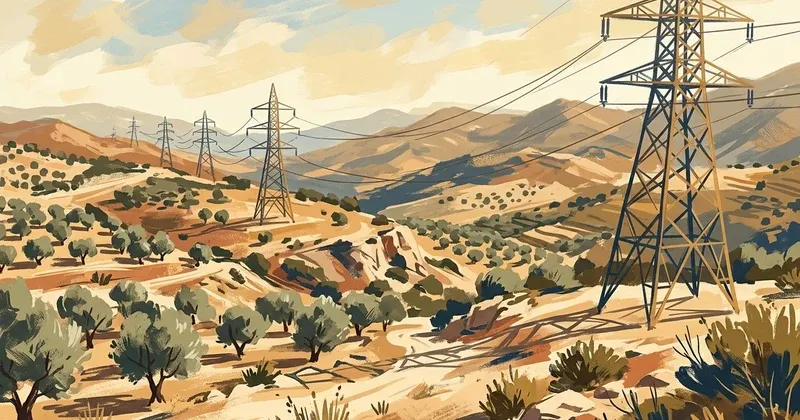
Crete's Pylon Debate Reaches Athens: Key Study Results Presented on November 11
A question that has been dividing opinion across Crete for years is set to move into sharper focus on November 11, 2026, when the National Technical University of Athens (NTUA) presents the final results of a major research study into the planned high-voltage power line between Chania and Damasta.
What Is Happening and Where
The NTUA has invited local authorities and the public to attend the presentation of its completed research findings. The event is open to all:
- Date: November 11, 2026
- Time: 7:00 p.m.
- Venue: NTUA Amphitheatre, Patission 42, Athens
Who Commissioned the Study and Why
The research was not initiated by the central government or the energy company behind the project — it was ordered by the Association of Municipalities of Crete (PED Kritis), the body that brings together local councils across the island. From the outset, the association provided full support for the project, with the clear aim of putting hard scientific evidence on the table before major decisions are made.
The Municipality of Apokoronas voted unanimously at its council to participate in this effort. Mayor Charalampos Koukianakis has consistently argued that decisions of this scale — affecting the natural environment, the cultural heritage, the scenery, and the economic future of Crete — must be grounded in knowledge and real data, not political convenience.
A Call to Cretans in Athens
Beyond the formal invitation from the NTUA, Mayor Koukianakis is making a personal appeal to the many Cretan associations and communities based in Attica. These are people who may have moved to the Greek capital but have never broken their ties with the island — groups that keep Cretan traditions, roots, and memory alive in the city.
His message is straightforward: show up. This is an opportunity to make sure the voice of Crete is heard in a room where science and local government come together to shape the island's future.
Development vs. Protection — or Both?
A key theme running through the mayor's call is the argument that protecting the environment and pursuing development are not opposing goals. The real question, as he frames it, is how development happens — whether it respects the landscape, the history, and the people of a place, or whether it rides roughshod over them.
The November 11 event is being positioned not just as a scientific presentation, but as a genuine public conversation about what kind of future Crete wants to build — and what it wants to hand on to the next generation.